How Bronze Sculptures Are Made
From the Artist's Vision to a Lasting Work of Art
Creating a bronze sculpture is a fascinating combination of art, craftsmanship, science, and fire. While bronze casting has been practiced for thousands of years, the process still requires skilled hands, careful attention to detail, and a remarkable amount of work behind the scenes.
At Kalispell Art Foundry, we use the traditional lost-wax bronze casting process, combining time-honored techniques with modern technology to transform an artist's original sculpture into a beautiful and enduring work of art.
Whether the sculpture is a small wildlife piece, a life-size figure, or a monumental installation, each bronze passes through a series of carefully coordinated steps before it is ready for display.
Step 1: The Original Sculpture
Every bronze begins with an idea.
An artist creates an original sculpture, traditionally using clay, wax, plaster, wood, or another sculpting material. This original artwork establishes the form, movement, texture, and personality of the finished piece.
The artist may spend weeks, months, or even years developing the sculpture before it is ready for casting.
Today, sculptures can also begin as digital 3D models or 3D scans. At Kalispell Art Foundry, we can enlarge, reduce, digitally modify, or 3D print a sculpture before beginning the bronze casting process.
Regardless of how the artwork begins, our goal is to preserve the artist's original vision throughout production.
Step 2: Mold Making
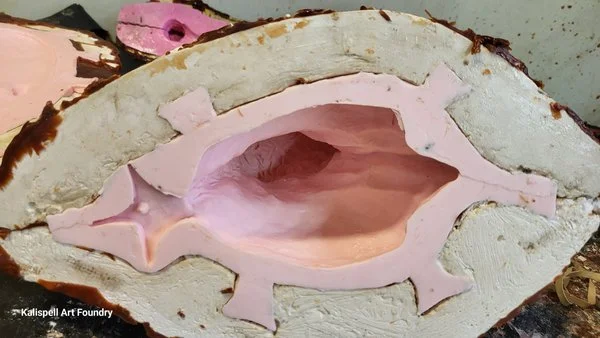
Once the original sculpture is complete, a mold is created to capture its shape and surface details.
Most traditional sculpture molds are made using flexible silicone or rubber, supported by a rigid outer shell that maintains the mold's shape.
The mold captures everything from the finest sculpted hair and feathers to the subtle textures of skin, fur, clothing, and other details.
Complex sculptures may need to be divided into multiple sections to make molding and casting possible.
Once complete, the mold allows the sculpture to be reproduced while preserving the original artwork.
Step 3: Creating the Wax Sculpture
The next step is to create a wax copy of the original sculpture.
Molten casting wax is applied inside the mold to create a hollow wax reproduction. Once cooled, the wax is carefully removed from the mold.
This wax sculpture is essentially a duplicate of the original artwork, but the walls are only thick enough to create the desired bronze casting.
For larger or more complicated sculptures, individual sections are cast in wax and prepared separately.
Step 4: Wax Chasing
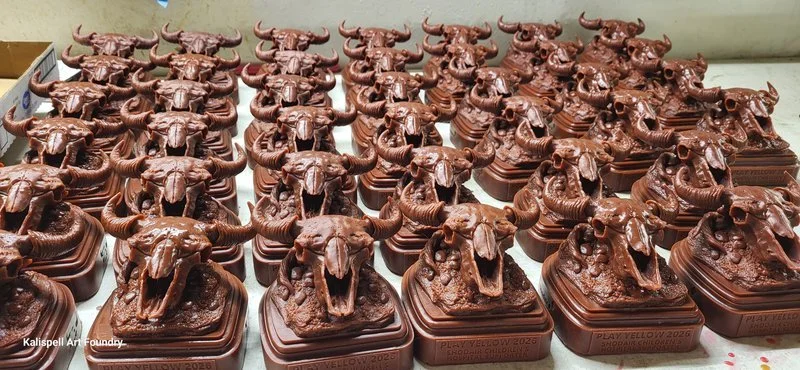
Before the wax can be cast into bronze, it must be carefully inspected and refined.
Our wax technicians remove mold seams, repair imperfections, correct surface defects, and restore any details that may have been affected during molding.
This process is called wax chasing.
It requires artistic judgment and a delicate touch because every mark in the wax can be transferred into the finished bronze.
The goal is to make the wax look exactly as the artist intended the finished sculpture to appear.
Step 5: Spruing and Gating
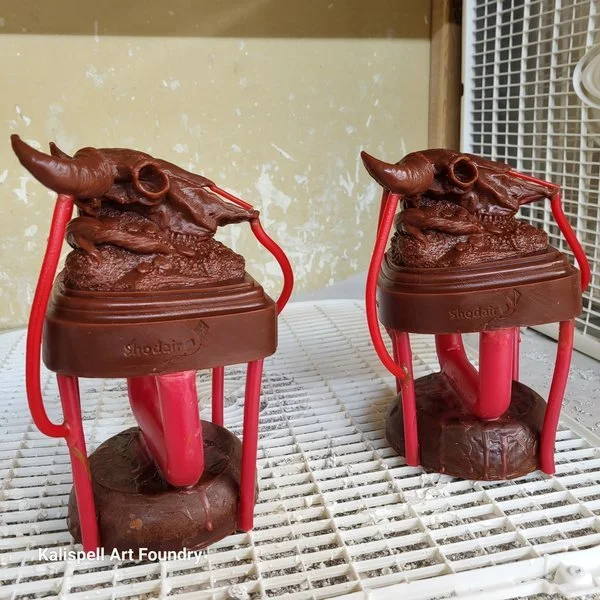
Next, a system of wax channels is attached to the sculpture.
These channels, called sprues and gates, create pathways that allow molten bronze to flow into the mold while helping gases escape during pouring.
Proper placement is critical. Bronze must be able to reach every part of the sculpture without creating unnecessary turbulence, trapped gases, or incomplete castings.
This is one of the many stages where the experience of the foundry team makes a tremendous difference.
Step 6: Building the Ceramic Shell
The wax sculpture is now ready for the investment process.
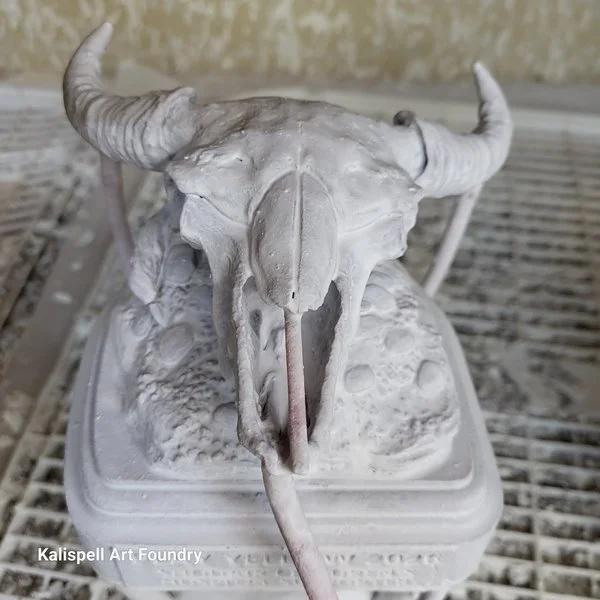
The wax assembly is repeatedly dipped into a specialized ceramic slurry and coated with refractory sand or stucco.
Each layer is allowed to dry before the next is applied. This process continues until a strong ceramic shell has formed around the entire wax sculpture.
The finished shell must be strong enough to withstand the extreme temperatures and pressures involved in pouring molten bronze while accurately preserving the sculpture's surface detail.
Step 7: The Lost-Wax Process
This is where the process gets its name.
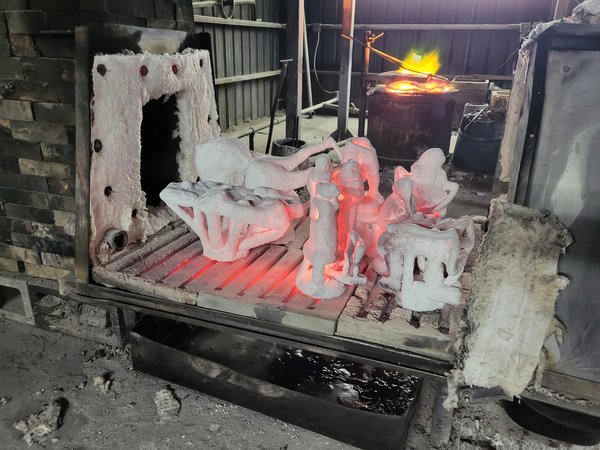
The ceramic shell is heated, allowing the wax inside to melt and drain away. The shell is then fired to remove remaining wax residue and develop the strength needed for casting.
What remains is a hollow ceramic mold containing a negative impression of the sculpture.
The original wax pattern is gone—literally lost—leaving behind the space that will soon be filled with molten bronze.
This is why the method is known as lost-wax casting.
Step 8: Pouring the Bronze
Now comes one of the most exciting moments in the foundry.
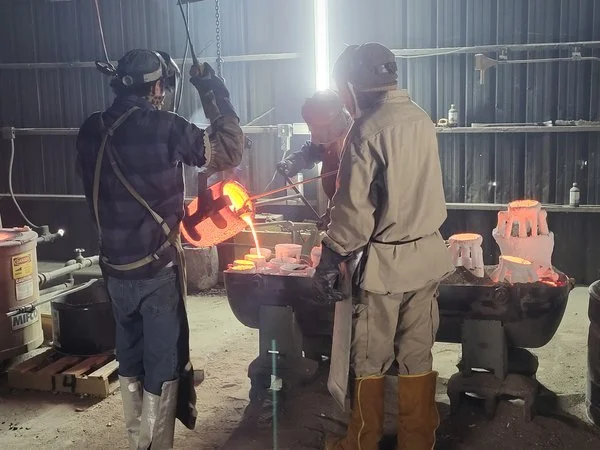
Bronze ingots are placed into a furnace and heated until the metal becomes molten, typically at temperatures around 2,000°F or higher, depending on the alloy and pouring conditions.
Once the bronze reaches the proper temperature, our pouring crew carefully transfers the molten metal and pours it into the prepared ceramic molds.
This process requires precise timing, coordination, specialized equipment, and strict safety procedures.
As the bronze flows through the gating system, it fills the cavity left behind by the wax, capturing the sculpture's shape and detail in metal.
The bronze is then allowed to cool and solidify.
Step 9: Breaking Away the Ceramic Shell
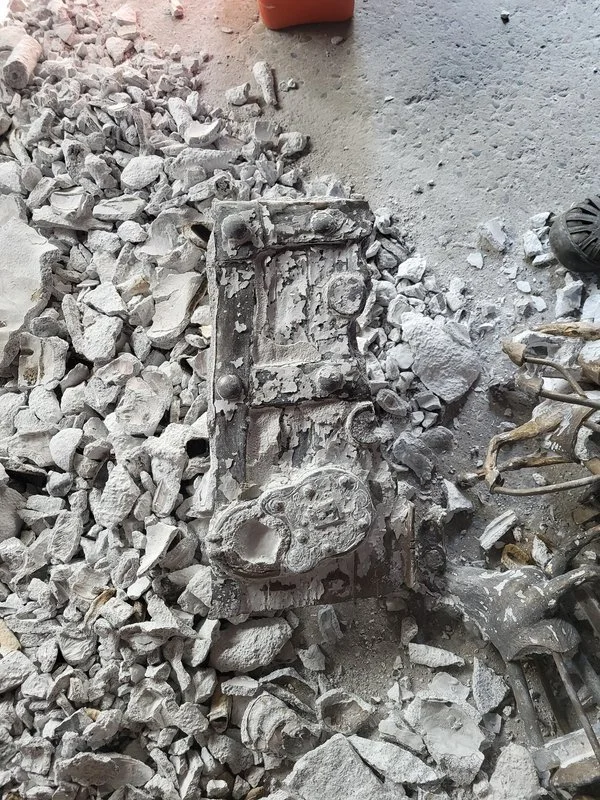
After the bronze has cooled sufficiently, the ceramic shell is carefully broken away to reveal the newly cast sculpture.
This is often the first opportunity to see the artwork in bronze.
The sprues and gates that carried molten metal into the casting are removed, and any remaining ceramic material is cleaned from the surface.
At this stage, the bronze is still rough and requires additional work before it resembles the finished sculpture.
Step 10: Welding and Assembly
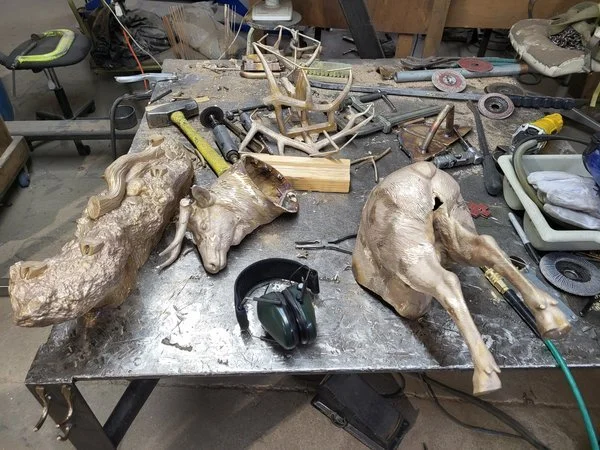
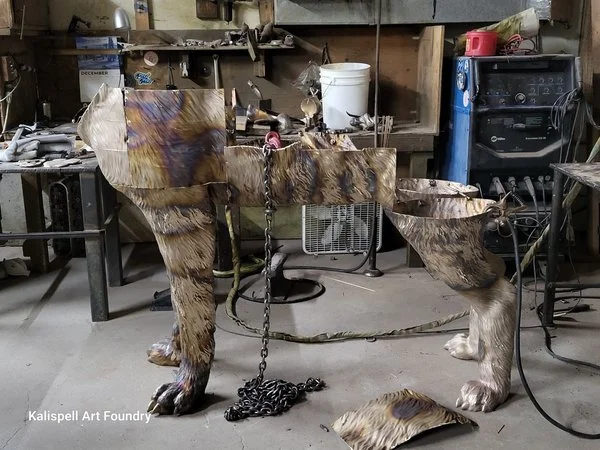
Larger sculptures are often cast in multiple sections.
These separate bronze pieces must be carefully aligned and welded together to recreate the complete sculpture.
After welding, the seams are chased and textured to match the surrounding artwork.
When performed correctly, the welded joints become virtually invisible.
For monumental sculptures, this stage may also involve internal structural supports, fabrication, engineering considerations, and specialized mounting systems.
Step 11: Metal Chasing
Metal chasing is one of the most important artistic stages of bronze production.
Our skilled metal chasers use grinders, files, chisels, rotary tools, and other specialized equipment to remove casting imperfections, repair surface defects, and restore the original sculpted detail.
Mold seams, sprue attachment points, and other evidence of the casting process must be carefully blended into the surrounding surface.
A talented metal chaser must understand both metalworking and sculpture. The goal is not simply to make the bronze smooth, but to preserve the artist's textures, forms, and sculptural intent.
Step 12: Patina — Giving Bronze Its Color
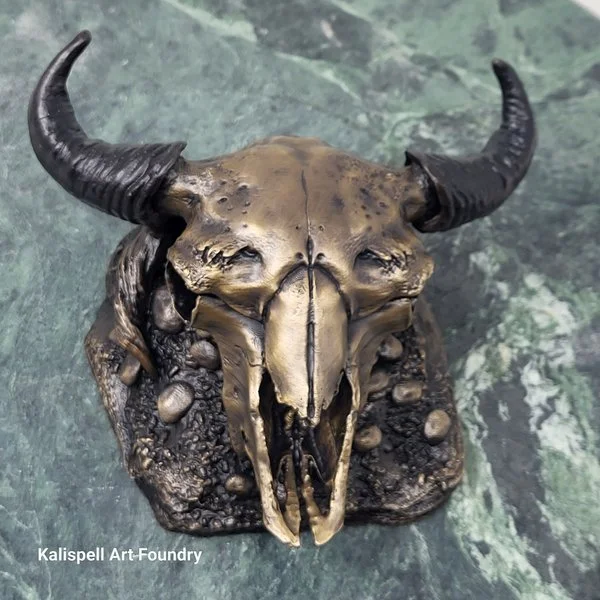
Many people are surprised to learn that bronze sculptures are not naturally the dark brown, black, green, or colorful works they see in galleries and public spaces.
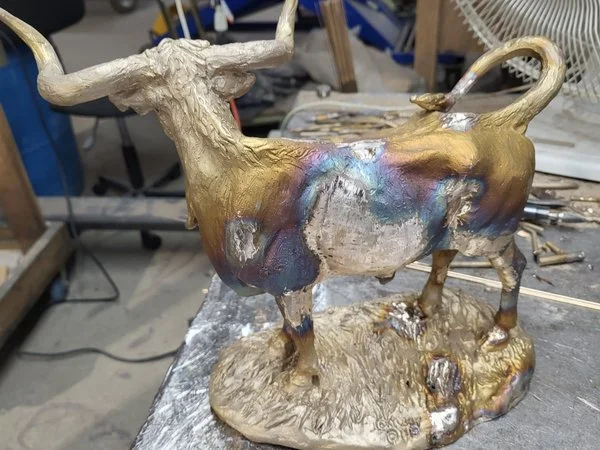
Freshly finished bronze has a warm, golden metallic appearance.
The familiar colors of bronze sculpture are created through a finishing process called patination.
Our patina artists apply carefully selected chemicals, often using heat, to create controlled reactions on the bronze surface.
These reactions can produce a remarkable variety of colors, including rich browns, deep blacks, greens, blues, reds, and other distinctive finishes.
Additional techniques may include polished bronze highlights, transparent color overlays, airbrushing, colored waxes, and other artistic finishes.
Patination is an art form in itself. The choice of color and finish can dramatically affect the mood, depth, and character of a sculpture.
Step 13: Protective Finishing
Once the desired patina is achieved, the sculpture is typically sealed with an appropriate protective finish, such as wax or a specialized clear coating.
This helps protect the patina and provides a finish suitable for the sculpture's intended environment.
Indoor and outdoor sculptures may require different protective treatments and maintenance schedules.
With proper care, a bronze sculpture can remain beautiful for generations.
Step 14: Final Assembly and Installation
The final step is preparing the sculpture for its new home.
Depending on the project, this may involve attaching a base, installing mounting hardware, completing structural assembly, crating, shipping, or coordinating installation.
Large public sculptures may require engineered foundations, lifting equipment, and specialized installation procedures.
After all the work of molding, wax chasing, investing, casting, welding, metal chasing, and patination, the finished bronze is finally ready to be enjoyed.
Modern Technology Meets Ancient Craftsmanship
Although lost-wax bronze casting has existed for thousands of years, today's foundries have access to remarkable new tools.
At Kalispell Art Foundry, we combine traditional bronze craftsmanship with 3D scanning, digital sculpting, 3D printing, and sculpture enlargement technology.
An artist's small clay maquette can be digitally scanned, enlarged, and 3D printed to create a life-size or monumental sculpture. Existing artwork can be reduced or reproduced, and digital models can be prepared for casting.
For suitable projects, 3D-printed expendable patterns can also be used directly in the investment casting process, reducing or eliminating certain traditional molding and wax production steps.
These technologies give artists more creative possibilities while preserving the craftsmanship that makes bronze sculpture so special.
Why Bronze?
Bronze has been a preferred material for fine art sculpture for thousands of years—and for good reason.
It offers strength, durability, exceptional detail, artistic versatility, and timeless beauty.
Bronze can capture the delicate texture of a feather, the expression of a face, or the powerful movement of a life-size animal. It can be finished in traditional earth tones, polished to a golden shine, or given vibrant contemporary colors.
Properly produced and maintained bronze sculptures can survive for centuries, becoming treasured works of art passed from one generation to the next.
Experience the Art of Bronze Casting
At Kalispell Art Foundry, bronze casting is more than a manufacturing process. It is a collaboration between artists and skilled craftspeople who share a commitment to quality and artistic excellence.
Every sculpture passes through the hands of technicians who specialize in molding, wax work, ceramic shell investment, bronze pouring, welding, metal chasing, and patina.
Together, these skills transform an artist's vision into something extraordinary.
From Clay to Bronze. From an Idea to a Legacy.
Interested in having your sculpture cast in bronze?
Whether you have a finished sculpture, a small maquette, a digital model, or an idea for a custom commission, Kalispell Art Foundry can help bring your artwork to life.
Contact Kalispell Art Foundry to discuss your bronze casting project or request a quote.